Oil Painting courses
APPROACH
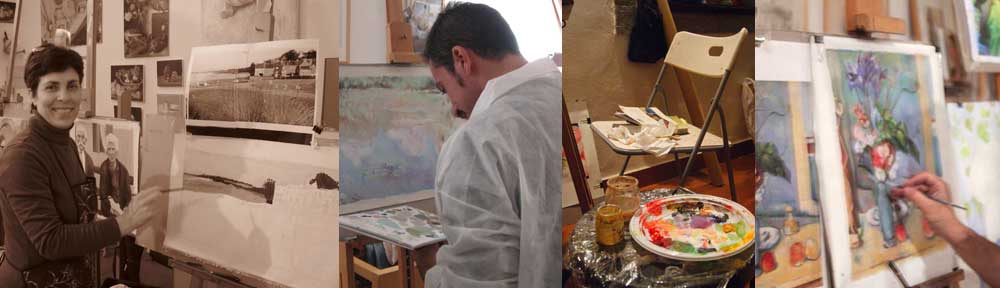
I propose experimenting with various oil painting techniques of your choice: from master copying, to the classic sfumato technique, to the coloristic approach of Impressionism, the textured palette knife technique, and even realist painting. The goal is to learn how to use oil in various stylistic ways, reproduce different color tones, understand the main harmonies, distinguish the various layers, and master the medium.
OUR BASIC COURSES
BASIC OIL PAINTING COURSE
Level: Beginners and intermediate
Duration: 6 to 12 lessons
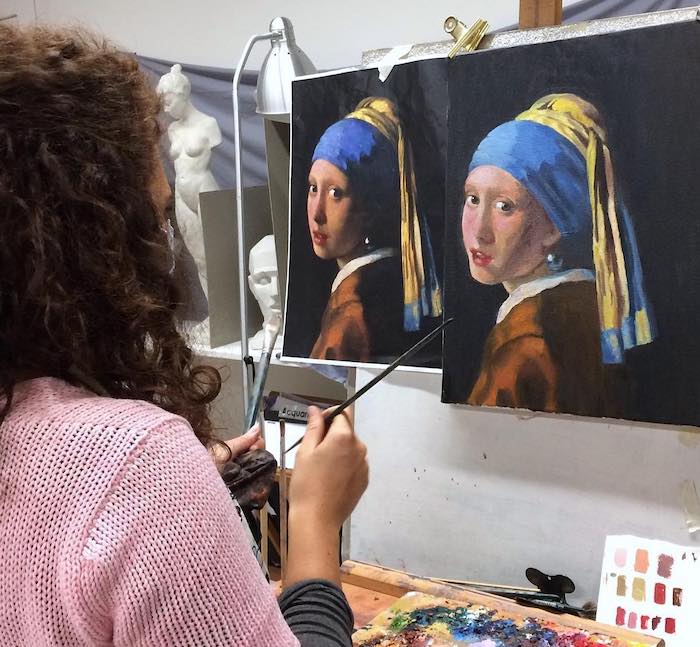
Have you never painted with oil paint? This is the course for you. Starting with an artist’s copy, you’ll learn how to faithfully reproduce colors, prepare a canvas from priming to the first and second layers, using the medium and different color harmonies.
DISCOVERING THE PALETTE KNIFE TECHNIQUE
Level: Beginners and intermediate
Duration: 6 to 12 lessons
The palette knife technique, used primarily in France after Impressionism, emphasizes layers of color rather than details and contours. It’s done “alla prima,” and a few sessions can be enough to capture the shifting reflections of light on the sea or the passing of clouds across the sky. This technique allows for great speed of execution and requires the development of a certain ability to synthesize. It’s very rewarding even for beginners, as it can be easily achieved in thick or thin layers.

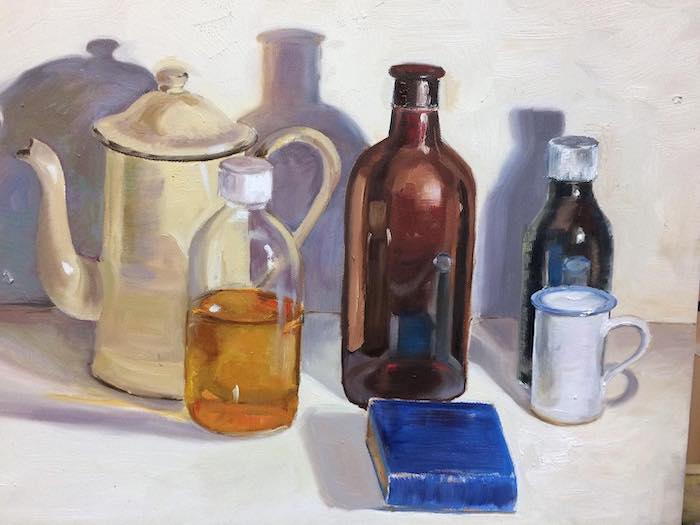
PAINTING OIL STILL LIFES
Level: Intermediate
Duration: 6 to 12 lessons
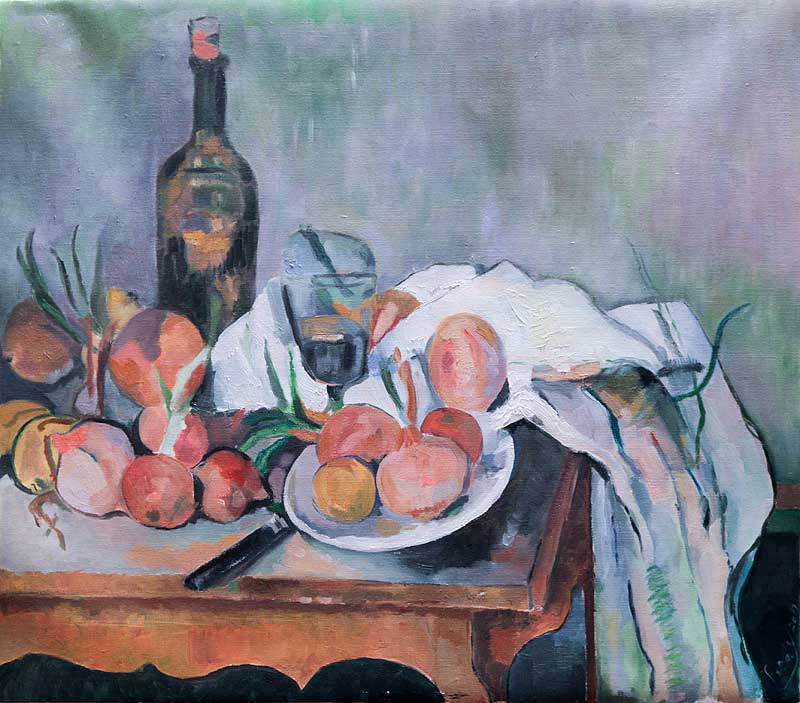
Do you already have a basic understanding of oil painting but have never painted from life? In this course, we’ll explore how painting subjects like still life from life is essential for developing a sense of natural color and tone, and for acquiring a sense of three-dimensional form. This type of work also offers the opportunity to gradually develop a personal palette and your own pictorial language.
ADVANCED COURSES
WORKING WITH A LIMITED PALETTE
Level: Intermediate and advanced
Duration: 6 to 12 lessons
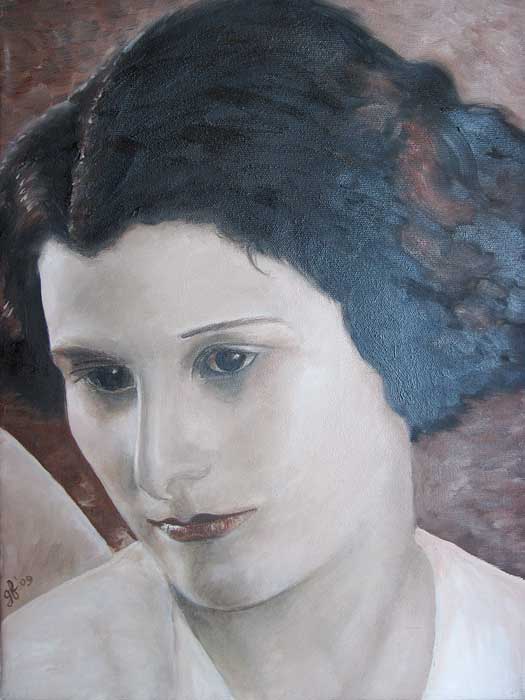
In this course, I propose working with a limited palette of grays, starting with subjects of your choice, such as personal photographs. Old photographs are very suitable for monochrome subjects using the French grisaille technique.
COLORISTIC OR REALISTIC APPROACH?
Level: Advanced
Duration: 6 to 12 lessons
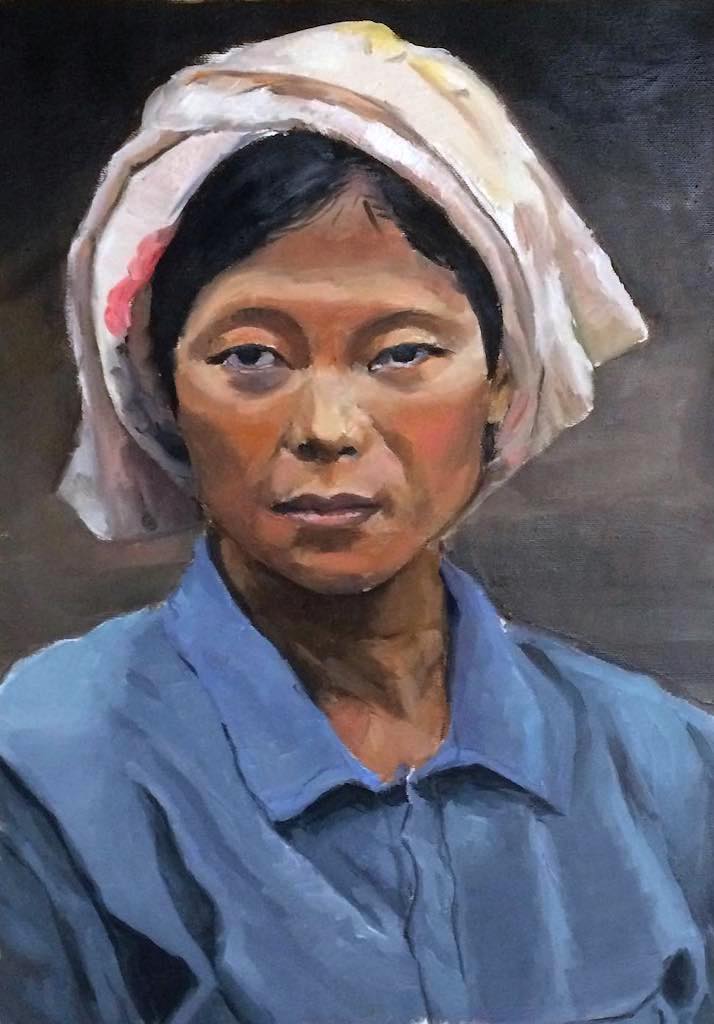
In this course, we explore oil painting in two ways: coloristic or tonal. Coloristic painting is based on the use of primary colors with their complementary ones, rather than earth tones, especially in the shadows, which allows the color to stand out and become brighter. It exploits the expressive potential of the pictorial touch which also serves to model the form with a more plastic and constructive approach.
The studio has a wide repertoire to draw from, choosing to work with a more tonally realistic approach. The Renaissance technique of sfumato and glazing is used to achieve a more realistic and photographic result.


